The Department of Robotic Joint Replacement Surgery at Royal Care Super Speciality Hospital provides specialised care for patients experiencing severe joint pain, arthritis, joint damage and mobility limitations.
Our department brings together experienced orthopaedic and joint replacement specialists, advanced surgical technology and comprehensive rehabilitation to provide treatment tailored to each patient's condition, anatomy and functional needs.
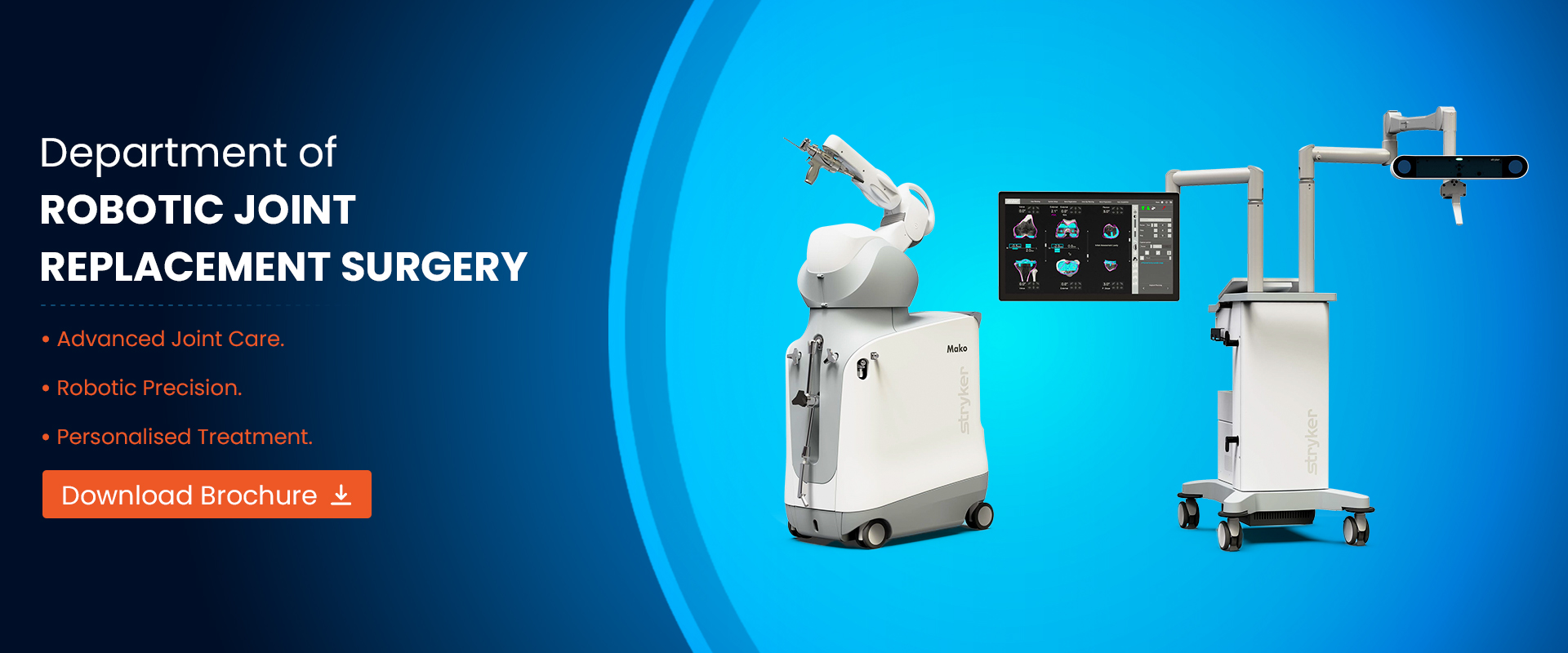
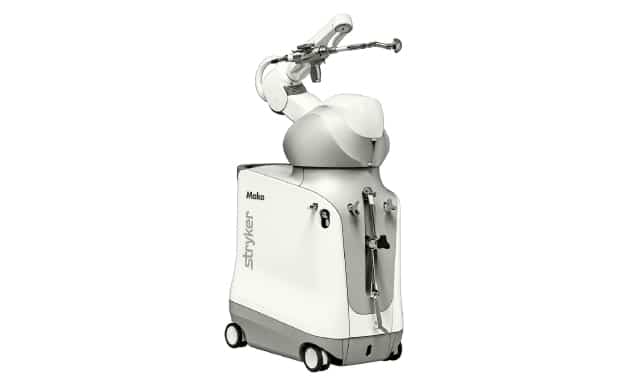
For eligible joint replacement procedures, our specialists are supported by the Stryker Mako 4 Robotic-Arm Assisted System, designed to assist with patient-specific surgical planning and technology-guided execution.
The Mako 4 platform supports multiple joint replacement applications, including Total Knee Replacement, Partial Knee Replacement and Total Hip Replacement, with Royal Care's brochure also highlighting its use in revision surgeries.
From diagnosis and treatment planning through surgery and rehabilitation, our focus is on helping patients move with greater comfort, confidence and independence.
Number of Specialists
No of patients
No of surgeries done
Royal Care has introduced the Stryker Mako 4 Robotic System, the fourth-generation Mako platform, to support advanced joint replacement care. The platform brings Total Knee, Partial Knee and Total Hip applications together within a single system.
Our team includes specialists experienced in joint replacement, arthroplasty, arthroscopy, sports medicine, trauma and orthopaedic surgery, enabling patients with a wide range of joint conditions to receive coordinated specialist care.
Every patient's joint anatomy and condition is different. Robotic-assisted technology supports patient-specific planning, helping the surgical team plan the procedure according to the patient's anatomy and clinical requirements.
Robotic assistance provides the surgeon with advanced planning and guidance during eligible procedures, supporting controlled execution of the surgical plan.
Patients have access to evaluation, diagnostic services, surgical care, hospital care, physiotherapy and rehabilitation within an integrated hospital environment.
Royal Care's joint replacement programme is supported by advanced diagnostic and treatment facilities, surgical infrastructure, critical care and rehabilitation services.
Recovery does not end with surgery. Physiotherapy and rehabilitation programmes are planned according to the patient's procedure, functional needs and individual recovery progress.
Get Back to Comfortable Movement
Advanced osteoarthritis and other degenerative conditions of the knee can lead to persistent pain, stiffness and difficulty with everyday activities such as walking and climbing stairs.
When appropriate non-surgical treatments no longer provide sufficient relief, total knee replacement may be considered.
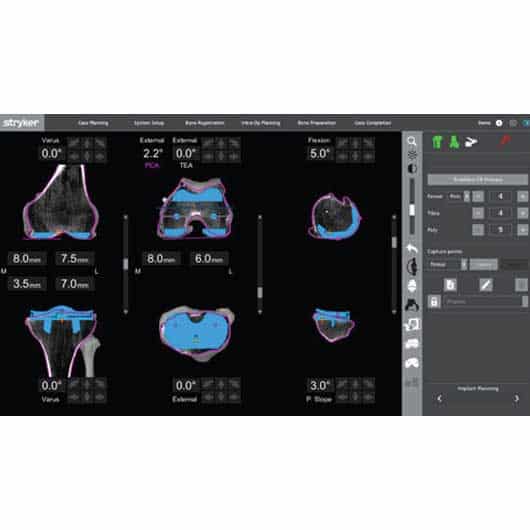
During total knee replacement, damaged joint surfaces are replaced with artificial components. With Mako robotic-assisted technology, the surgical team can develop a personalised surgical plan and use technology-assisted guidance during the procedure.
Stryker reports that more than 1.5 million Mako Total Knee procedures have been performed globally.
Preserving More of the Natural Knee When Appropriate
Not every patient with knee arthritis has damage throughout the entire knee.
When arthritis is limited to a particular compartment and the patient meets the appropriate clinical criteria, partial knee replacement may be considered.
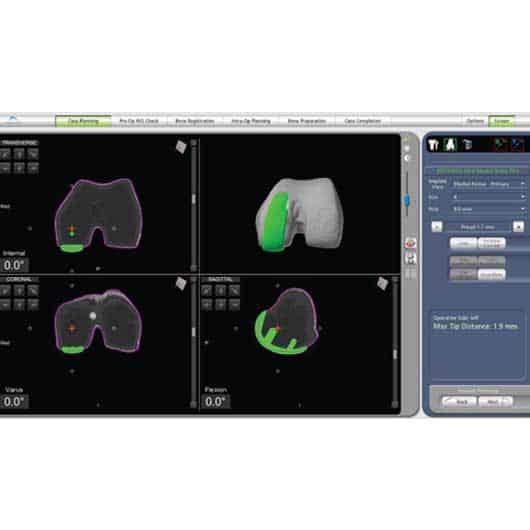
Only the damaged portion of the knee is replaced, allowing healthy bone, cartilage and other structures to be preserved wherever clinically appropriate.
Patient selection is important. The orthopaedic specialist will assess factors including the extent of joint damage, alignment, ligament function, activity level and imaging before determining whether Partial or Total Knee Replacement is appropriate.
Stryker's Mako 4 material cites 98% survivorship at a 10-year follow-up for Mako Partial Knee based on the referenced clinical study.
Move with Greater Comfort and Confidence
Hip arthritis and other forms of joint damage can cause persistent pain, stiffness and difficulty walking, sitting, climbing stairs and carrying out everyday activities.
Total hip replacement involves replacing damaged parts of the hip joint with artificial components.
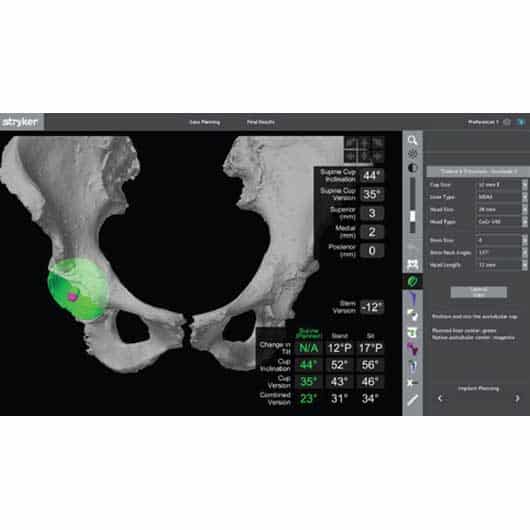
Mako Total Hip supports patient-specific planning and technology-assisted execution. The system also includes capabilities for pelvic tilt planning and range-of-motion-to-impingement analysis, providing additional information to support surgical planning.
The decision to use robotic assistance is based on the patient's condition and the treating surgeon's clinical assessment.
Comprehensive Care for Shoulder Problems
The shoulder is a complex joint essential for upper-limb movement and many everyday activities.
For patients with advanced shoulder joint damage, shoulder replacement surgery may be considered following specialist evaluation.
Depending on the patient's condition, treatment may include:
The appropriate treatment is determined after evaluating the joint condition, bone quality, rotator cuff function, age, activity level and overall health.
Specialised Care for Previously Replaced Joints
In some patients, a previous joint replacement may require further surgical intervention because of changes involving the implant or surrounding joint structures.
Revision Joint Replacement Surgery is generally more complex than a primary joint replacement and requires detailed evaluation, careful planning and specialist surgical expertise.
Royal Care's Mako 4 programme includes Revision Surgeries alongside Total Knee, Partial Knee and Total Hip Replacement.
Our specialists evaluate each patient individually to determine the most appropriate treatment and surgical approach.
Our joint replacement specialists evaluate and manage conditions affecting the knee, hip and shoulder that can cause persistent pain, stiffness, reduced mobility and loss of function.
Surgery is not automatically required for these conditions. The appropriate treatment is determined following clinical assessment, imaging and evaluation of the patient's response to non-surgical treatment.
The treatment journey begins with a detailed clinical assessment and appropriate imaging to understand the patient's joint condition and overall health.
The patient's individual anatomy is considered while developing a personalised surgical plan.
During surgery, robotic technology assists the surgeon in carrying out the planned procedure.
Technology-assisted guidance helps the surgical team work towards the planned positioning and alignment of the joint implant.
Following surgery, rehabilitation is planned according to the patient's procedure, clinical condition and individual recovery needs.
Robotic-assisted orthopaedic surgery combines the expertise of the orthopaedic surgeon with advanced technology to support greater precision during joint replacement procedures. The Mako 4 SmartRobotics™ system supports Total Knee, Partial Knee and Total Hip procedures through advanced surgical planning, guidance and robotic-assisted technology.
The system helps surgeons plan and perform procedures based on the patient's anatomy, supporting accurate and controlled surgical execution during joint replacement surger
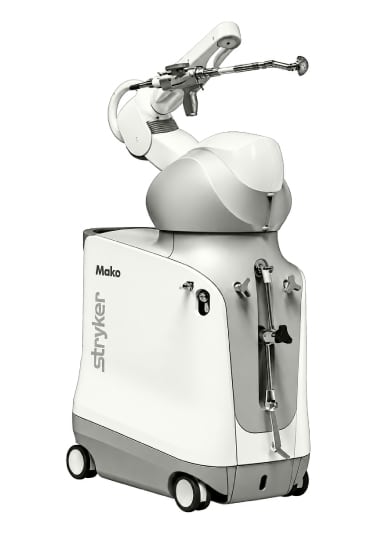
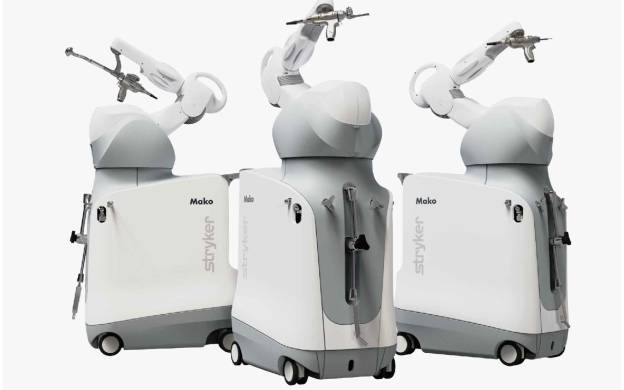
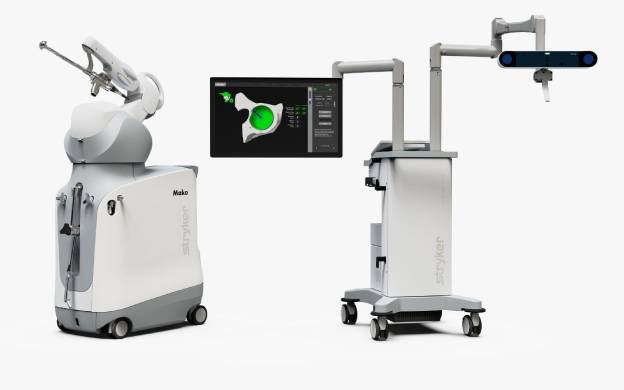
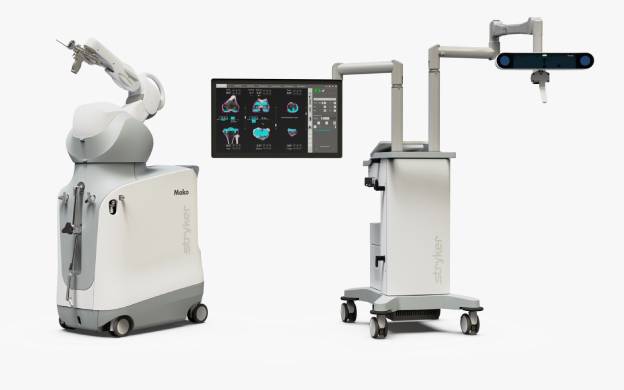
Mako 4 brings multiple orthopaedic applications together within a single robotic system and integrates Stryker's fourth-generation Q Guidance System, built on more than 20 years of experience in surgical guidance technologies.
A larger, high-definition display is designed to enhance the user experience and provide clear visual guidance during procedures.
The proprietary FP8000 camera provides a wider field of view to improve probe and array visibility.
Mako 4 features a smaller operating-room footprint designed to support easier transport, setup and turnover.
The system incorporates the MICS 3 handpiece, attachments and blades, built on Stryker's System 9 power-tool platform, to support Total Knee, Partial Knee and Total Hip procedures.
Advanced technology designed to support accurate planning, guidance and controlled surgical execution.
Robotic joint replacement surgery combines the expertise of an orthopaedic surgeon with advanced technology for patient-specific surgical planning and guidance during eligible joint replacement procedures.
No. The surgeon remains in control throughout the procedure. The robotic system assists the surgeon with planning, guidance and execution of the surgical plan.
Mako 4 supports Total Knee Replacement, Partial Knee Replacement and Total Hip Replacement applications. Royal Care's programme also highlights Revision Surgeries within its Mako 4 joint replacement offering.
Depending on the procedure and individual patient, potential benefits may include personalised surgical planning, technology-assisted precision, support for planned implant positioning, preservation of healthy structures where clinically appropriate and controlled execution of the surgical plan.
Individual benefits and outcomes vary and should be discussed with the treating surgeon.
Knee replacement may be considered for patients experiencing severe knee pain, advanced osteoarthritis, persistent stiffness, reduced range of motion or difficulty performing everyday activities when appropriate non-surgical treatments no longer provide adequate relief.
Total knee replacement is generally considered when joint damage is extensive, while partial knee replacement addresses a specific damaged compartment in appropriately selected patients while preserving healthy portions of the knee wherever possible.
Hip replacement may be considered for patients with advanced hip osteoarthritis, severe joint degeneration, rheumatoid arthritis, avascular necrosis, certain hip fractures or significant joint damage associated with persistent pain and functional limitations.
Revision surgery involves further surgical treatment of a joint that has previously undergone replacement. Because revision procedures can be more complex, careful assessment and specialised surgical planning are required.
No. Robotic-assisted surgery is not required or suitable for every patient. The orthopaedic specialist will evaluate the patient's symptoms, medical history, imaging, joint condition and treatment goals before recommending an appropriate approach.
Recovery varies depending on the type of surgery, patient's overall health, joint condition and individual progress. The treating team will develop an appropriate rehabilitation programme and guide the patient through recovery.
Physiotherapy and rehabilitation are important components of recovery following joint replacement. The programme is individualised and may focus on mobility, strength, joint function and returning to everyday activities.