Number of Specialists
No of patients
No of surgeries done
Our orthopaedic specialists offer expertise across trauma, joint replacement, arthroscopy, sports medicine and paediatric orthopaedics, enabling comprehensive care for a wide spectrum of conditions.
Advanced surgical techniques and modern technology support accurate diagnosis, precise treatment and minimally invasive approaches where clinically appropriate.
Our joint replacement services address advanced degeneration of the hip, knee and shoulder, with treatment plans tailored to individual mobility and lifestyle needs.
From emergency fractures to complex musculoskeletal trauma, patients receive timely evaluation, surgical management and coordinated multidisciplinary care.
Advanced arthroscopic techniques enable the diagnosis and treatment of selected joint conditions through smaller incisions, supporting reduced tissue disruption and recovery.
Treatment does not end in the operating room. Integrated physiotherapy and rehabilitation help patients progressively regain strength, mobility and functional independence.
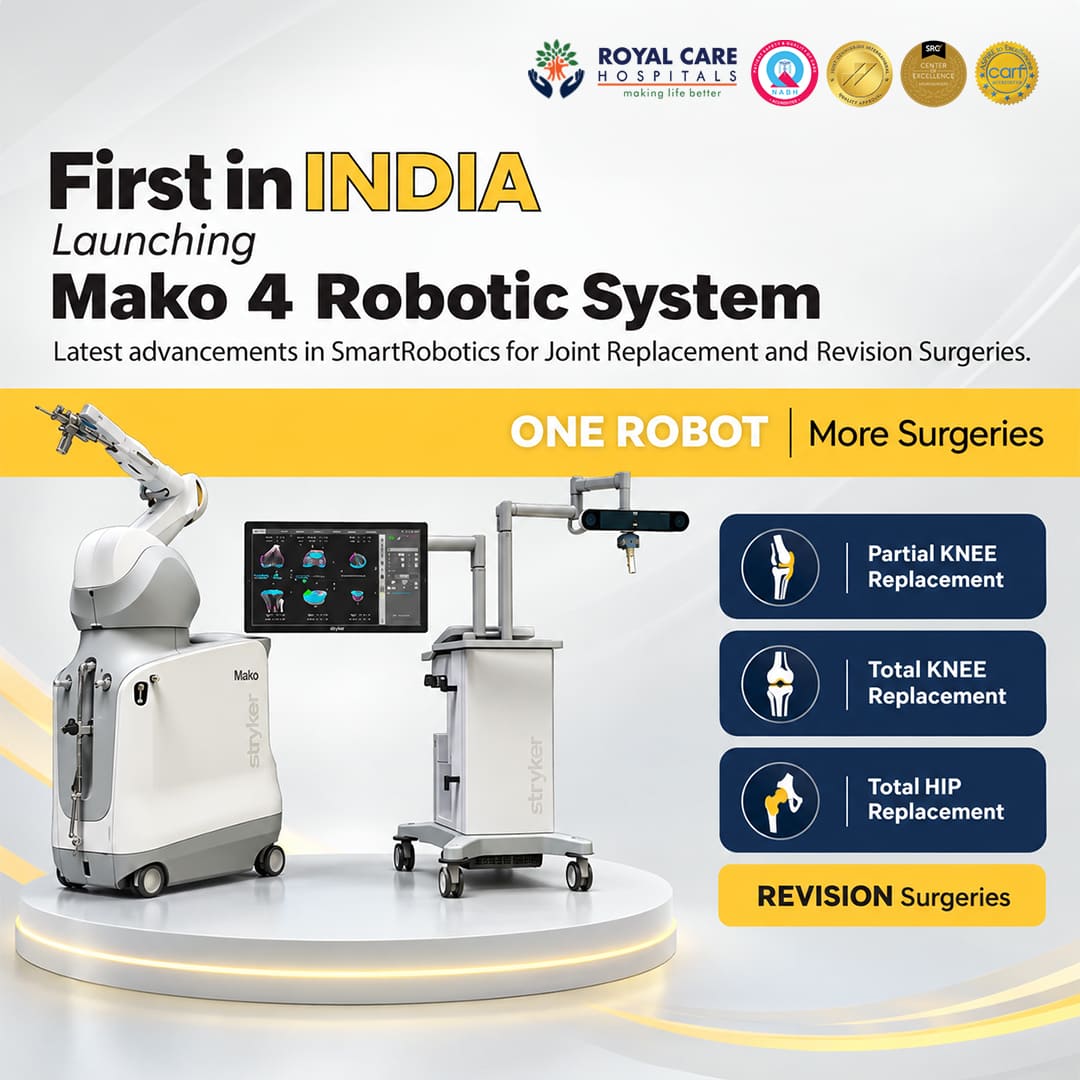
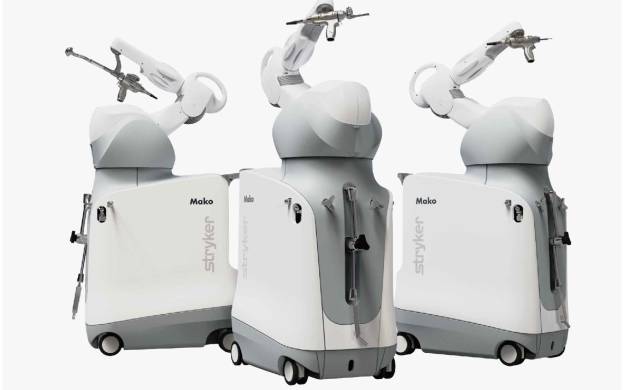
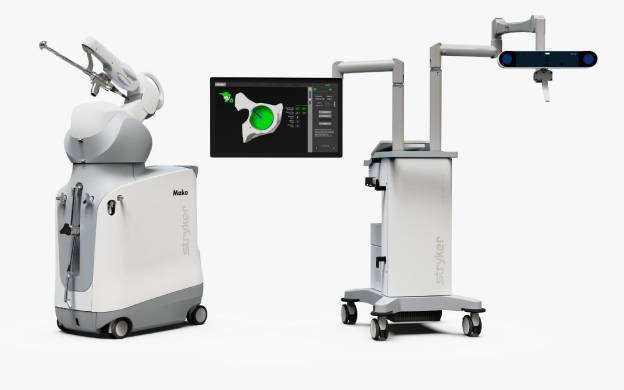
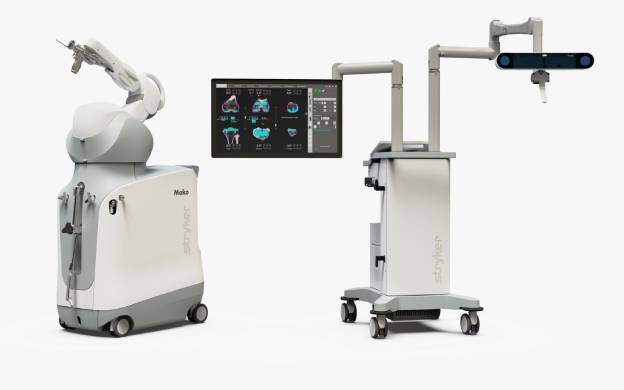
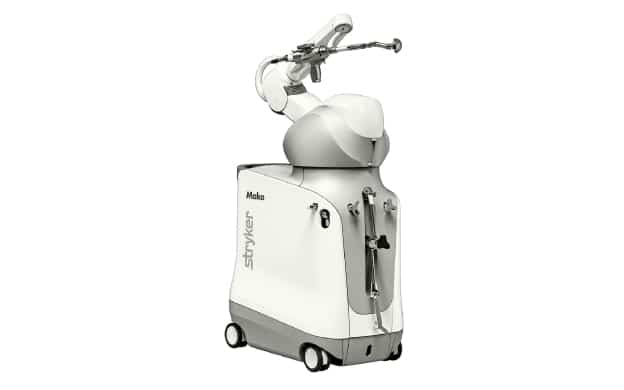
Robotic-assisted orthopaedic surgery combines the expertise of the orthopaedic surgeon with advanced technology to support greater precision during joint replacement procedures. The Mako 4 SmartRobotics™ system supports Total Knee, Partial Knee and Total Hip procedures through advanced surgical planning, guidance and robotic-assisted technology.
The system helps surgeons plan and perform procedures based on the patient's anatomy, supporting accurate and controlled surgical execution during joint replacement surger
Mako Total Knee supports robotic-assisted total knee replacement procedures using advanced planning and surgical guidance. Globally, more than 1.5 million Mako Total Knee procedures have been performed, according to Stryker data cited in the brochure.
Mako Partial Knee supports partial knee replacement for selected patients where only a portion of the knee joint requires replacement. The brochure reports 98% survivorship at 10-year follow-up, based on the cited study.
Mako Total Hip supports robotic-assisted total hip replacement and includes capabilities for pelvic tilt planning and range-of-motion-to-impingement analysis, helping surgeons plan the procedure with consideration of the patient's anatomy and joint movement.
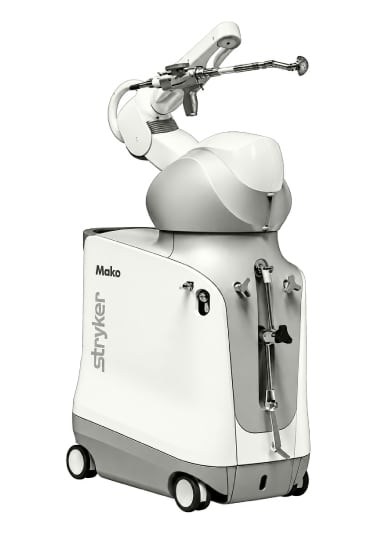
Mako 4 brings multiple orthopaedic applications together within a single robotic system and integrates Stryker's fourth-generation Q Guidance System, built on more than 20 years of experience in surgical guidance technologies.
A larger, high-definition display is designed to enhance the user experience and provide clear visual guidance during procedures.
The proprietary FP8000 camera provides a wider field of view to improve probe and array visibility.
Mako 4 features a smaller operating-room footprint designed to support easier transport, setup and turnover.
The system incorporates the MICS 3 handpiece, attachments and blades, built on Stryker's System 9 power-tool platform, to support Total Knee, Partial Knee and Total Hip procedures.
Advanced technology designed to support accurate planning, guidance and controlled surgical execution.
Progressive joint wear can cause pain, stiffness and reduced mobility. Treatment is tailored to the severity of the condition, ranging from conservative management to joint replacement when required.
Ligament injuries can compromise knee stability and function, particularly among athletes and physically active individuals. Appropriate patients may benefit from arthroscopic ligament reconstruction.
Meniscal injuries can cause pain, swelling, locking and restricted movement. Treatment depends on the location, severity and nature of the tear.
These injuries can lead to persistent shoulder pain, weakness and difficulty with overhead movements. Selected patients may benefit from arthroscopic repair.
Repeated shoulder dislocation can affect joint stability and everyday movement. Specialist assessment helps determine the most appropriate treatment approach.
Orthopaedic trauma can range from straightforward fractures to complex injuries involving multiple bones, joints and soft tissues. Timely and specialised treatment is essential for optimal recovery.
From ligament and meniscal injuries to shoulder and other joint conditions, sports injuries require accurate diagnosis and carefully planned treatment to support a safe return to activity.
Growing bones require specialised care. Our paediatric orthopaedic services address congenital, developmental and injury-related conditions affecting children.
Reduced bone strength can increase fracture risk, particularly in older adults. Appropriate orthopaedic evaluation and management can help restore mobility and reduce complications.
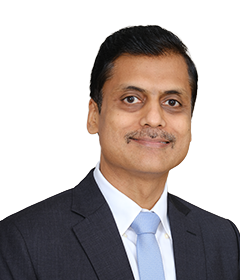
MBBS, MS (Orthopaedics), FTA(Australia), FIA(Belgium)
Senior Consultant Orthopaedics & Arthroplasty, Specialist in Robotic joint Replacement surgeries
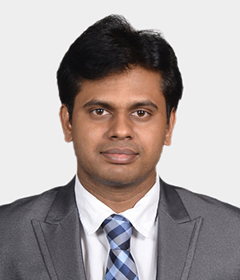
MS ortho, DNB., FoTs(Trauma fellow), FASM (Arthroscopy), Shoulder Fellow (Japan).,
Consultant Arthroscopy, Joint Replacement and Trauma
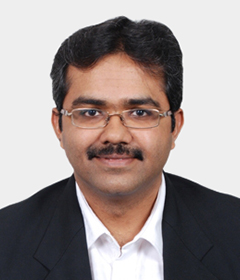
MS (Ortho), DNB (Ortho), MRCS (ED) Fellowship in Arthroscopy (Shoulder & Knee), Diploma in Sports Medicine (Swiss), shoulder fellow (Italy).,
Consultant Arthroscopy, Joint Replacement and Trauma
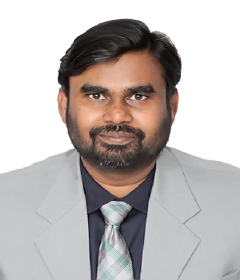
MBBS, D Ortho, MS Ortho, FSHM, FOR, FASM, FSS.,
Consultant Arthroscopy, Joint Replacement and Trauma
The department provides comprehensive care for fractures, arthritis, joint degeneration, sports injuries, ligament and meniscal injuries, shoulder conditions, complex trauma and paediatric orthopaedic conditions.
Yes. Royal Care provides 24-hour fracture and trauma care, including assessment and treatment of emergency and complex orthopaedic injuries.
Arthroscopy is a minimally invasive surgical technique that uses a small camera and specialised instruments to diagnose and treat conditions inside a joint through small incisions. It may be used for selected knee, shoulder, hip, ankle, elbow and wrist conditions.
Joint replacement may be recommended when significant joint damage causes persistent pain and restricted mobility, particularly when non-surgical treatments no longer provide sufficient relief.
Yes. The department provides specialised evaluation and treatment for sports-related injuries, including ACL and PCL injuries, meniscal tears, ligament injuries and selected shoulder conditions.
Yes. The department provides specialised paediatric orthopaedic care for children with congenital, developmental and injury-related musculoskeletal conditions.
Yes. Physiotherapy and rehabilitation form an important part of recovery following orthopaedic procedures. Rehabilitation plans are tailored to the patient's condition, procedure and recovery goals.
Depending on the condition, patients may have access to diagnostic imaging such as X-ray, CT and MRI to support accurate diagnosis and treatment planning.