Because Every Drop Tells a Story
At Royal Care Hospital, our Blood centre is more than just a service — it’s a promise to save lives. As one of Coimbatore’s most trusted healthcare institutions, we are committed to providing safe, timely, and voluntary blood component donations to support emergency care, complex surgeries, and critical treatments.
With NABH-compliant safety standards, advanced diagnostic testing, and a highly skilled medical team, we ensure every donation is handled with precision, care, and gratitude.
Transfusion Medicine is an important service of RCSSH. The Blood Centre meets all the blood product requirements that the high volume of surgeries demand.
Department Overview
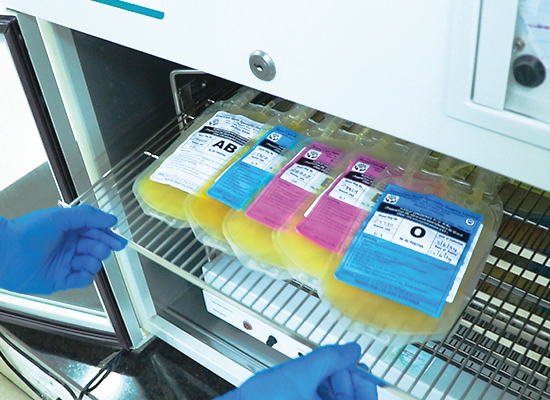
Transfusion medicine is concerned with blood products and blood transfusions. However, its scope is not limited to the blood centre laboratory alone, it has reached the patient’s bedside. Its services are particularly vital and play a curative role in the treatment of various neurological disorder, autoimmune diseases, for kidney diseases, liver diseases, haematological disorder and bone marrow transplantation. Department of Transfusion Medicine at RCSSH provides round the clock facility with complete solutions to patients in need of blood component therapy, therapeutic apheresis, and immunohaematology laboratory diagnostics.
The Department’s state-of-the-art facilities ensure that the blood is processed and stored to global standards. Quality control is of paramount importance. In order to ensure provision of safe and quality blood, regular quality control checks are done for all reagents, antisera, blood components and equipment. The Department also participates in an external quality assurance with CMC, Vellore,BEQASprograme.To ensure donor & patient safety, our centre has enrolled in Hemovigilance Programme of India ( HvPI)


Infrastructure & Technology
A sprawling blood centre with 5000sq.feet to cater the needs of our patients and donors.
Reception cum registration counter : Registration of blood donors and dealing with patient’s blood requirements
Counselling area: To counsel the donors regarding the process of blood donation, its advantages and providing support for a safe donation which will benefit both the donor as well as the recipient.
Blood Donor Complex
RCH donor complex remains open from 6 am to 8 pm for the convenience of donors. Facilities for voluntary, replacement, autologous and directed donations are also available.
A qualified transfusion medicine specialist screens prospective donors to determine their suitability for blood donation.
Blood is collected only from voluntary donors who satisfy our stringent selection criteria and after proper screening tests for infectious diseases.
All standards set by the state authorities,Drug Controller ,India, and the American Association of Blood Banks are met.
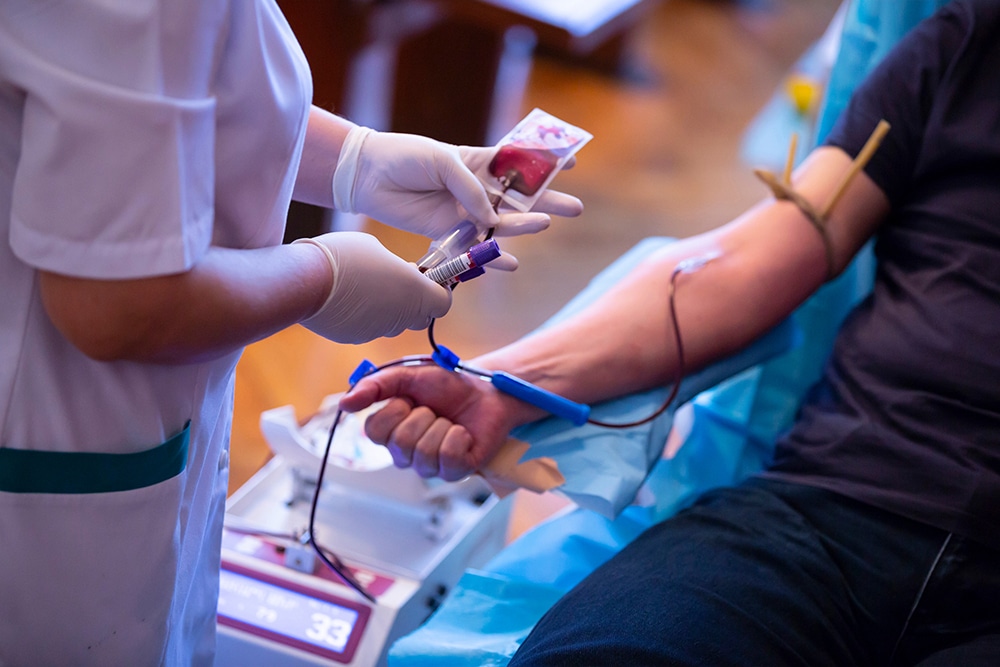
Counsellor counsel the donors before and after donation. After the blood is collected, donors are kept under observation.
The Department also registers donors for the emergency , which meets requirements when there are shortages and specific group requirements.
Well equipped with automated blood collection monitors, comfortable donation couches which provides a pleasant donation journey to the blood donor.
Post donation,donor is provided with adequate rest , fresh refreshments and instructions to be followed.
Donor cards and certificates are given to all voluntary blood donors.
The blood screening reports of all donors are sent through Email.
Blood Processing
Infectious Disease Screening Laboratory
Fully automated 4th generation chemiluminescence Assay (Roche Diagnostics) for mandatory tests i.e. HIV I + II, HBsAg, HCV
Syphilis, Malaria screening by NACO(India) approved methods.
Immuno Haematology Laboratory
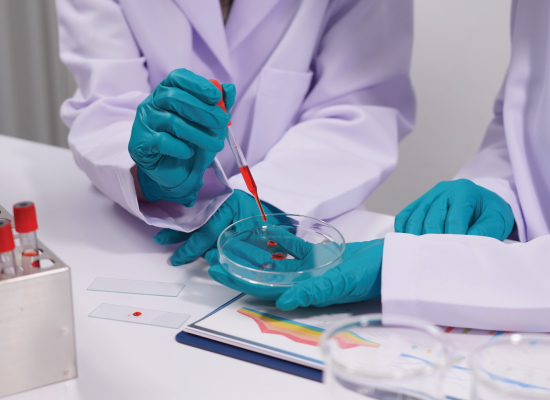
Equipped with fully automated Tulip diagnostics (Gel card technology) to perform routine as well as complex immuno hemotological problems.
Services
The department prepares and issues the following blood components
Red cell concentrates (Packed red blood cells, Leuco - depleted, Irradiated, saline washed)
Platelet Concentrates( Random donor and Single Donor)
Fresh frozen plasma
Cryoprecipitate
Transfusion support for allo immune/auto immune patients.
Transfusion support for multi organ transplantations and critical care patients.
Therapeutic services like
Therapeutic phlebotomy to patients with Polycythaemia and patients with hemochromatosis.
Preparation of platelet-rich plasma for dermatological disorders
The department performs investigation like
Blood Grouping & Rh Typing
Resolving ABO Discrepancies
Antibody screening
Antibody identification
Direct Anti Globulin (Coombs) test
Indirect Anti-Globulin Tests( Coombs) test
ABO ( Iso- Agglutinin) and Rh antibody titration
Rh Phenotyping
Evaluation of feto-maternal blood group incompatibility
Work up of immune hemolytic anemias
Monospecific direct anti-globulin test.
Treatments and Procedures
The therapeutic use of apheresis technology is done to remove disease causing substances or blood components and providing supportive and therapeutic solutions using state of the art apheresis equipment. We are involved in advances in transfusion medicine.
Therapeutic Apheresis Procedures
Intra Uterine Transfusion

Why Donate Blood?
Blood is a life-saving resource that cannot be manufactured. A single unit of blood can save up to three lives. Your decision to donate helps patients undergoing surgeries, cancer treatments, childbirth, and emergency care.
At Royal Care, we make the process easy, safe, and meaningful — so you can donate confidently, knowing your contribution makes a real difference.
Health Benefits of Blood Donation
Donating blood is more than an act of kindness — it's a vital step toward saving lives and improving your own health. While your donation helps others in critical need, it also offers benefits like better heart health, emotional well-being, and a stronger, healthier body.

Mini Health Check-Up
Each donation includes a basic health screening, helping you stay informed about your vital signs like blood pressure, hemoglobin levels, and pulse.
Regulates Iron Levels
Regular donation helps maintain healthy iron levels and reduces the risk of hemochromatosis, a condition caused by excess iron accumulation.

Promotes Heart Health
Lower iron levels reduce oxidative stress, which can support cardiovascular health and improve blood circulation.

Stimulates Blood Cell Production
Your body quickly replenishes the donated blood by generating new red blood cells, which supports overall blood health.

Boosts Mental Well-Being
Knowing your blood is saving lives creates a lasting sense of fulfillment, purpose, and emotional well-being.
Supports Liver Function
By helping to regulate iron stores, blood donation reduces strain on the liver and may contribute to better liver health.
Encourages Healthy Lifestyle Habits
Many donors become more health-conscious, increasing their water intake, eating balanced meals, and maintaining regular sleep before and after donation.

May Help in Weight Management
Though not a weight-loss method, regular blood donation can burn a small number of calories and support metabolic activity.
Blood Donation Process
Donating blood is quick and simple:
- Registration: Fill out a short donor health questionnaire for ensuring safety of donor as well as patients.
- Health Screening: Basic vitals like pulse, blood pressure, temperature, hemoglobin and blood group and eligibility review.
- Donation: The process takes 15–20 minutes using sterile, single-use bag with needles.
- Recovery: Rest for 15 minutes and light refreshments are provided after donation.
- Recognition: Donors receive a Certificate of Appreciation from Royal Care.

Who Can Donate Blood?
Eligibility
Any adult in good health, mentally alert and physically fit both male and female, can donate blood. Men can donate safely once in every three months while women can donate every four months.
- Age: Donor should be in the age group of 18 to 60 years.
- Weight: Should be more than 45 kg. Haemoglobin: More than 12.5 gms %.
- Blood Pressure: Systolic & Diastolic BP should be within normal limits.
- Pulse Rate & Temperature: Should be within normal limits.
- Recent Illness: Should be free from cough, cold, diarrhoea & any infections.
- Should have a good meal and adequate sleep & not to be under the influence of alcohol.
- Tattoo/Acupuncture: Should not have had any in the last 12 months.
Donor Deferral Criteria
- Surgery/Blood Transfusion: No history of surgery or blood transfusion within the past 12 months.
- Cancer: Should not have any form of cancer.
- Infection: Should not have Hepatitis B, C, Tuberculosis, Leprosy, HIV.
- Heart Disease: Should not have any heart diseases, heart attack or congenital anomalies.
- Diabetes & Hypertension: Medical & treatment history will be discussed and decided by medical officer.
- Dental Extraction: Can donate after 14 days.
- Medications: Certain medications may pose a risk to the donor or recipient, and if you're taking them you can consult our doctor for eligibility.
- Other Diseases: Should not have Epilepsy, Asthma, Jaundice, Chronic Liver disease, Kidney diseases, Bleeding Disorders, Thalassemia, Sickle Cell Anaemia, Polycythemia Vera.
- High-Risk Individuals: Should not have had any history of genital ulcers/discharge, history of multiple sexual partners and drug addiction.
- Any other health related queries will be consulted by our Blood Centre Medical Officer.
Types of Blood Donation
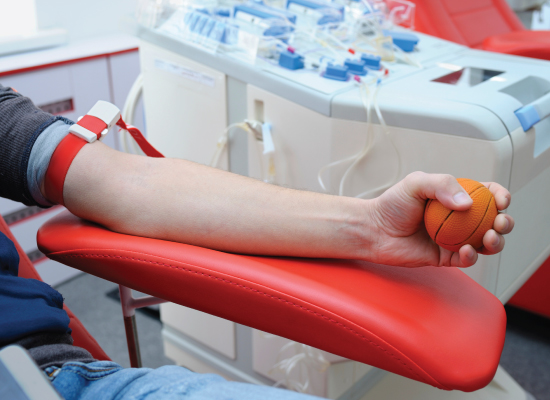
Platelet Donation (SDP – Single Donor Platelets)
Collected using apheresis technology, platelet donation is critical for patients undergoing chemotherapy, major surgeries, or treatment for dengue fever.
Whole Blood Donation
Used in surgeries, trauma cases, and anemia treatment. This is the most common donation type.
Be someone’s reason to live. When you donate Platelets, your act makes a lasting impact.
What is Platelet Apheresis?
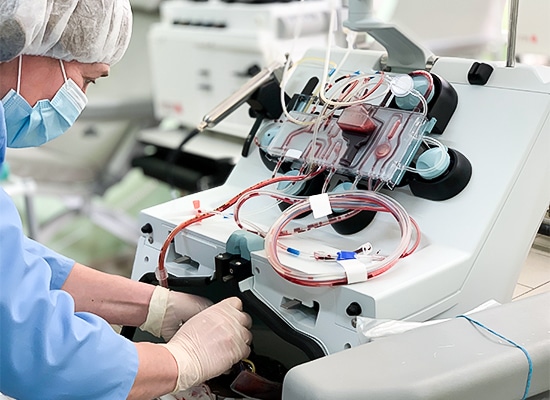
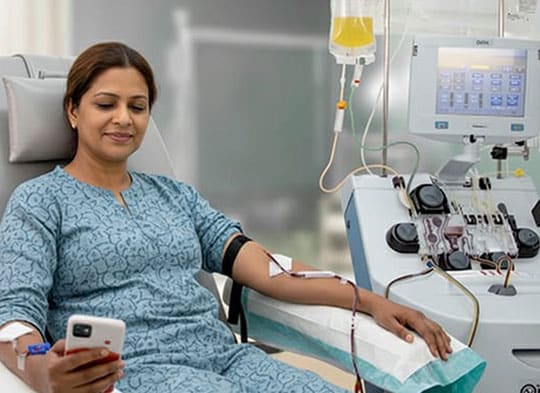
Unlike whole blood donation, platelet donation uses an automated cell separator machine to separate platelets and return other blood components to the donor in real-time.
- Takes 60 to 90 minutes.
- Safe, comfortable, and minimally invasive.
- Can be donated every 14 days, more frequently than whole blood up to 24 times a year.
Why Single Donor Platelets (SDP) Matter:
- Higher platelet yield — one SDP equals platelets from 6–8 random donor platelets.
- Safer transfusions — fewer donor exposures reduce immune complications.
- Critical support for oncology, cardiology, surgery, haematology, organ transplantation and Critical care patients.
Who Can Donate Platelets ?
Eligibility Criteria:
- The donor should preferably be a repeat donor, having given blood 1–2 times earlier.
- Male donors are preferred and they should ideally have the same blood group as the recipient.
- Eligibility criteria are the same for blood and platelet donors and will be assessed with a donor health questionnaire by our trained personnel.
- The donor should have a prominently visible vein on the front of the arm for ensuring adequate blood flow during the procedures.
- The age of the donor should be between 18-55 years.
- The weight of the donor should be >55kg, Hemoglobin-12.5g/dl or more.
- The platelet count of the donor should be more than 2 lakhs per microlitre.
- The interval between two platelet donations should be at least one week. One should not donate platelet more than 24 times in a year.
- One cannot donate platelets if they had taken aspirin, aspirin-containing medications, piroxicam or nonsteroidal anti-inflammatory drugs, such as ibuprofen in the last 48 hours. This is because these drugs affect the potency and performance of your platelets.
- Should not smoke before platelet donation.
Our SDP Donation Facility:
- State-of-the-art apheresis machines
- Skilled transfusion medicine specialist and technical staff.
- Comfortable donation environment with full monitoring through the procedures.
- Immediate post-donation care and certification.
- Absolutely Zero Adverse effects post - donation.
Safety & Quality Assurance
At Royal Care, your safety is our highest priority:
- All equipment are sterile and single-usage kits.
- Donations undergo rigorous screening for infectious diseases.
- NABH-accredited safety protocols are strictly followed.
- Donor privacy and respect are paramount.
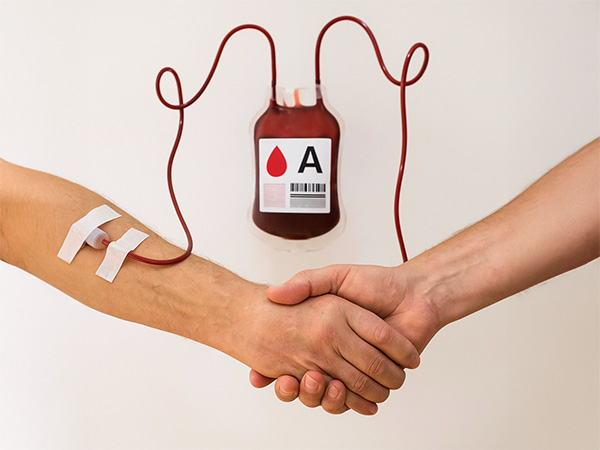
Lives Saved by your Blood Donation
Your donation supports:
- Road traffic accident victims.
- Cancer and chemotherapy patients.
- Women with childbirth complications.
- Children with blood disorders like thalassemia.
- Individuals undergoing life-saving surgeries.
- Organ Transplantation Patients (liver, heart, lung, pancreas, Kidneys)
- Critical care patients
Join Our Donor Community
Become part of a growing network of heroes who give the gift of life. Stay informed about blood drives, awareness events, and inspiring stories from donors and patients.