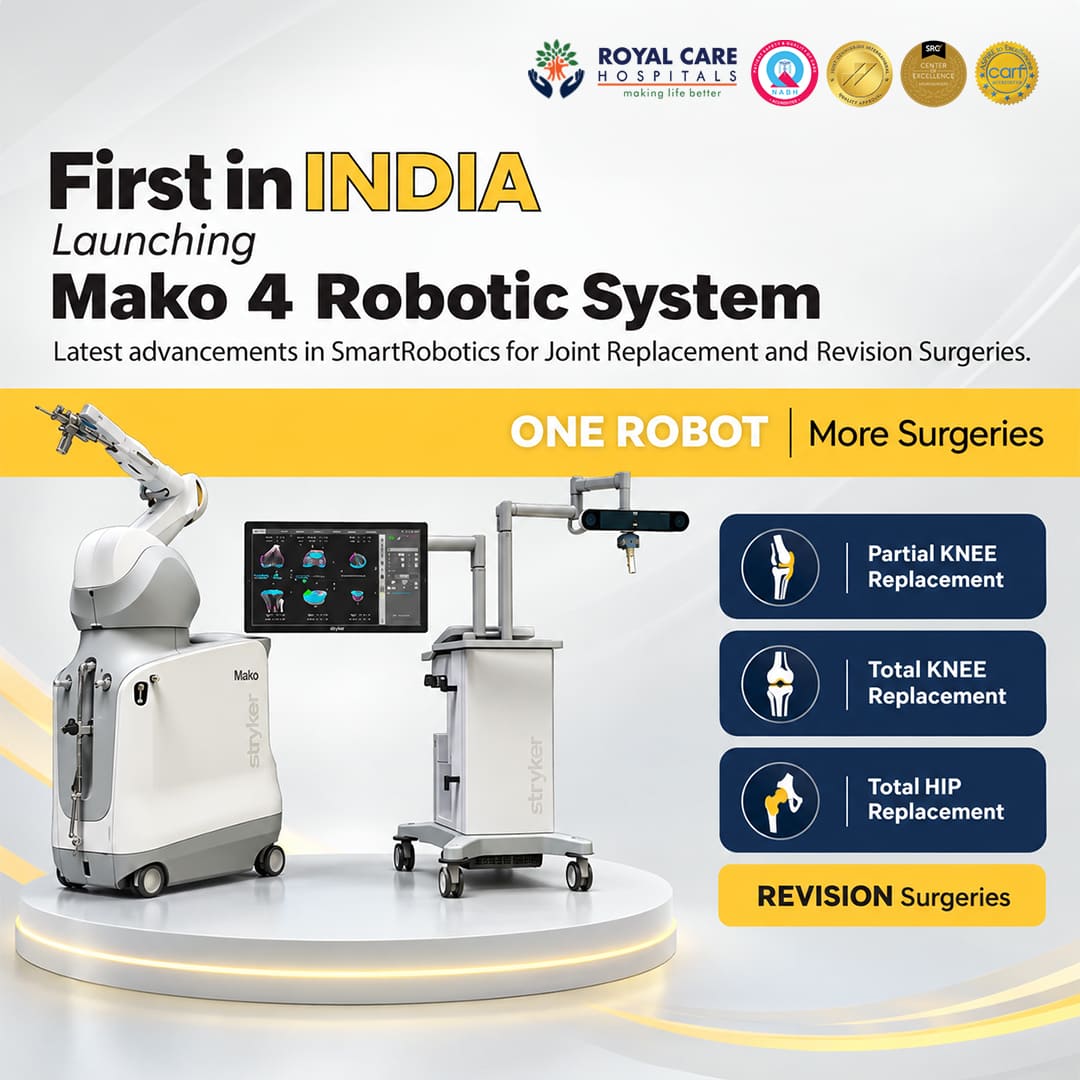
Knee replacement is no longer a one-size-fits-all procedure. Advances in orthopaedic technology have given surgeons new ways to plan and perform joint replacement, including robotic-assisted knee replacement. At the same time, conventional knee replacement remains a well-established surgical option and continues to help many patients regain mobility and reduce pain.
This often leaves patients with an important question: Is robotic knee replacement better than traditional knee replacement?
The answer is not simply about choosing newer technology. Both procedures have the same fundamental goal—to replace a damaged knee joint and help the patient return to a more comfortable and functional life. The difference lies mainly in how the surgery is planned and assisted.
Understanding these differences can help patients have a more informed discussion with their orthopaedic surgeon.
What Is Knee Replacement Surgery?
The knee is a complex joint where the thighbone, shinbone and kneecap come together. With conditions such as advanced osteoarthritis, rheumatoid arthritis, severe joint degeneration or previous injury, the cartilage covering the joint can gradually wear away.
As the condition progresses, patients may experience:
- Persistent knee pain
- Stiffness and reduced movement
- Difficulty walking or climbing stairs
- Pain while standing up or sitting down
- Swelling around the joint
- Difficulty performing everyday activities
When non-surgical treatments are no longer providing sufficient relief, an orthopaedic specialist may recommend knee replacement.During knee replacement surgery, the damaged surfaces of the knee are removed and replaced with artificial components designed to restore the function of the joint.
Royal Care's orthopaedic department provides knee replacement as part of its joint replacement services and also handles complex and revision joint replacement procedures.
What Is Traditional Knee Replacement?
Traditional, or conventional, knee replacement is a well-established surgical technique that has been used successfully for decades.The surgeon evaluates the patient's knee, reviews imaging and determines the appropriate surgical plan. During the procedure, specialised instruments are used to remove the damaged portions of the joint and position the artificial components.
The procedure is performed directly by the surgeon, who uses established surgical techniques and their clinical judgement throughout the operation.
Traditional knee replacement should not be considered an outdated approach. It remains an effective option for many patients, depending on their condition and individual requirements.
What Is Robotic Knee Replacement?
Robotic-assisted knee replacement uses computer-based planning and robotic technology to assist the surgeon during the procedure.One important point for patients to understand is that robotic knee replacement is still performed by an orthopaedic surgeon. The robotic system does not independently perform the surgery.
Instead, technology can assist the surgeon with planning and execution by providing information about the patient's individual anatomy and helping with the planned bone preparation and implant positioning.
Does Robotic Surgery Mean More Precision?
One of the key reasons robotic assistance has gained attention in joint replacement is the ability to support detailed preoperative planning and intraoperative execution.Every patient's knee anatomy is different. The degree of deformity, alignment, bone condition and extent of joint damage can vary considerably.
Robotic-assisted systems can help the surgical team work with a plan based on the patient's anatomy rather than relying solely on standard measurements.However, technology is only one part of the equation. The surgeon's experience, clinical judgement and ability to select the appropriate patient and procedure remain critical.
Is Robotic Knee Replacement Less Painful?
Patients often associate robotic surgery with less pain and a faster recovery. However, recovery after knee replacement depends on several factors and should not be guaranteed solely because robotic assistance is used.Pain after surgery can be influenced by the patient's overall health, surgical technique, pain-management protocol, rehabilitation, muscle strength and individual healing response.
Royal Care's current joint replacement programme includes rapid recovery programmes with targeted rehabilitation integrated from the first day of surgery.This highlights an important point: successful recovery is not determined by the surgical technology alone. Postoperative rehabilitation is an important part of the overall treatment journey.
Is Recovery Faster With Robotic Knee Replacement?
Recovery varies from one patient to another.Some patients undergoing robotic-assisted procedures may experience benefits associated with the precision and planning of the procedure. However, it would be misleading to say that every patient will recover faster with robotic surgery.
Recovery can depend on:
- Age and general health
- Muscle strength before surgery
- Severity of knee damage
- Presence of other medical conditions
- Type of knee replacement performed
- Surgical technique
- Pain management
- Commitment to physiotherapy and rehabilitation
A structured rehabilitation programme can help patients gradually regain strength, flexibility, balance and confidence in movement.
Who May Be Considered for Robotic Knee Replacement?
Robotic-assisted surgery may be considered for patients who require knee replacement and are appropriate candidates following an orthopaedic evaluation.However, not everyone who needs a knee replacement necessarily needs robotic assistance.
The surgeon may consider factors such as:
- The extent of arthritis or joint degeneration
- Knee alignment and deformity
- Bone quality
- Previous knee surgery
- Whether the procedure is a primary or revision replacement
- Overall health and medical history
- Functional expectations and lifestyle
For example, patients requiring complex or revision joint replacement may need a different surgical strategy altogether.
Which Is Better: Robotic or Traditional Knee Replacement?
There is no universal answer.For one patient, robotic-assisted knee replacement may offer useful advantages in surgical planning and execution. For another, conventional knee replacement may be entirely appropriate.
The better option is the one that matches the patient's anatomy, condition, health status and treatment requirements.It is also important not to choose a procedure simply because it is technologically newer. A proper orthopaedic assessment should come first.
Your surgeon can explain:
- Whether knee replacement is necessary
- Which type of knee replacement is appropriate
- Whether robotic assistance could benefit your case
- What the surgery involves
- Expected recovery and rehabilitation
- Potential risks and complications
- What you can realistically expect after surgery
- What Should You Ask Your Orthopaedic Surgeon?
Before deciding on knee replacement, patients can consider asking:
Do I definitely need knee replacement?
Understanding whether surgery is necessary is the first step.
Am I a suitable candidate for robotic-assisted surgery?
Not every patient requires or benefits from robotic assistance.
What type of knee replacement is appropriate for me?
The surgical approach depends on the condition of your joint.
What can I expect during recovery?
Ask about hospital stay, walking, physiotherapy and returning to everyday activities.
What happens if I have had previous knee surgery?
Previous procedures may influence surgical planning.
How will rehabilitation be managed after surgery?
Recovery does not end when the operation is completed.
Making the Right Choice for Your Knee
The discussion around robotic versus traditional knee replacement should ultimately be about the patient—not the technology.
Robotic-assisted surgery offers surgeons additional technology to support planning and execution, while conventional knee replacement remains a proven and widely used approach. Both can be appropriate depending on the patient's condition.
At Royal Care Hospitals, the orthopaedic team provides joint replacement care including primary, complex and revision procedures, with rehabilitation incorporated into the recovery pathway. The hospital's orthopaedic team includes specialists in joint replacement and robotic joint replacement surgery.
If persistent knee pain is affecting your mobility, work or everyday activities, an orthopaedic evaluation can help you understand your options.
The right knee replacement is not necessarily the newest one. It is the one that is right for you.
Book an Orthopaedic Consultation at Royal Care Hospitals
If knee pain is limiting your daily life, speak with an orthopaedic specialist to understand whether knee replacement—and which surgical approach—may be appropriate for you.